Myanmar cuisine is one of Southeast Asia’s best-kept secrets. Nestled between Thailand, China and India, its food weaves together rich herbs, savory fermented notes, and a signature balance of sour, salty and spicy flavors without overwhelming heat.
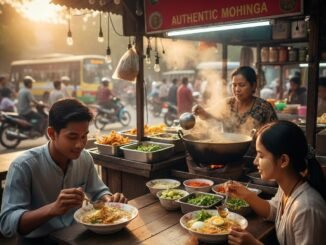
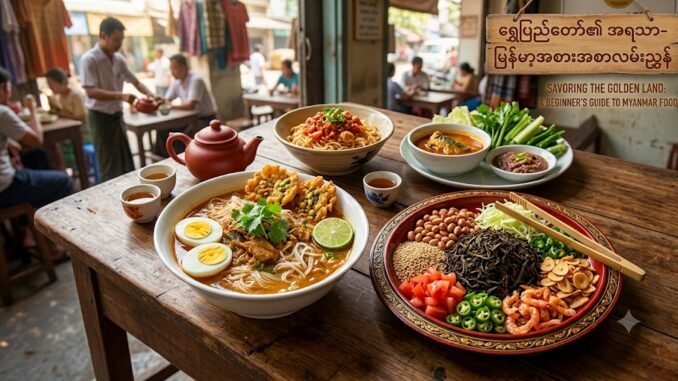
Mohinga (မုန့်ဟင်းခါး): Often called Myanmar’s national dish, Mohinga is an aromatic fish-based noodle soup thickened with toasted rice or chickpea flour. Traditionally eaten for breakfast, it is served over thin rice vermicelli and customized with crispy yellow pea fritters (akyaw), hard-boiled eggs, cilantro and a squeeze of fresh lime.
Laphet Thoke (လက်ဖက်သုပ်) – Tea Leaf Salad: Myanmar is one of the few places in the world where tea is eaten as well as drunk. Laphet Thoke combines tart, fermented green tea leaves with crunchy roasted peanuts, toasted sesame seeds, fried garlic chips, tomatoes, and chili. It offers an unforgettable contrast of soft, tangy, and crunchy textures.
Shan Noodles (ရှမ်းခေါက်ဆွဲ): Hailing from the Shan State in eastern Myanmar, this comfort food features thin rice noodles tossed in a warm, fragrant tomato and chicken or pork sauce. Served either as a soup or dry broth-on-the-side, it’s finished with crushed peanuts, pickled mustard greens, and chili oil.
A standard Myanmar meal is a feast for the eyes. Ordering a curry (pork, fish, chicken, or mutton) brings a table filled with complimentary sides: steaming rice, a sour broth, fresh raw or parboiled vegetables (tozaya), and spicy fermented fish paste (ngapi yay).
In Myanmar culture, salads (thoke) aren’t just leafy greens—they are bold, hand-tossed mixes of noodles, ginger, raw papaya, or tofu, seasoned with shallot oil, lime and fish sauce.